
AI for Banks: Benefits, Challenges, and Future Applications 2025
September 8, 2025
Microsoft 365 for Small Businesses 2025
September 9, 2025AI for Banks: Transforming Financial Services
Clear, actionable guide to AI use cases, benefits, risks, and steps banks can take now.
Introduction to AI in Banking
Artificial intelligence (AI) now plays a central role in modern banking. Banks face higher customer expectations, stricter rules, and more competition. AI delivers tools that help meet these pressures.
AI systems learn from data and make predictions or decisions. Banks use models to scan transactions, find anomalies, and forecast needs. Unlike fixed rules, AI improves with new data. That makes it valuable in fast-changing financial settings.
Common uses include automating document checks, running chatbots, and monitoring risk in real time. These functions speed service and cut errors. They also let banks offer more tailored products to customers at scale.
Adoption requires a balance. Banks must protect privacy, obey regulations, and keep customer trust. With the right controls, AI can be a safe, powerful tool for growth.
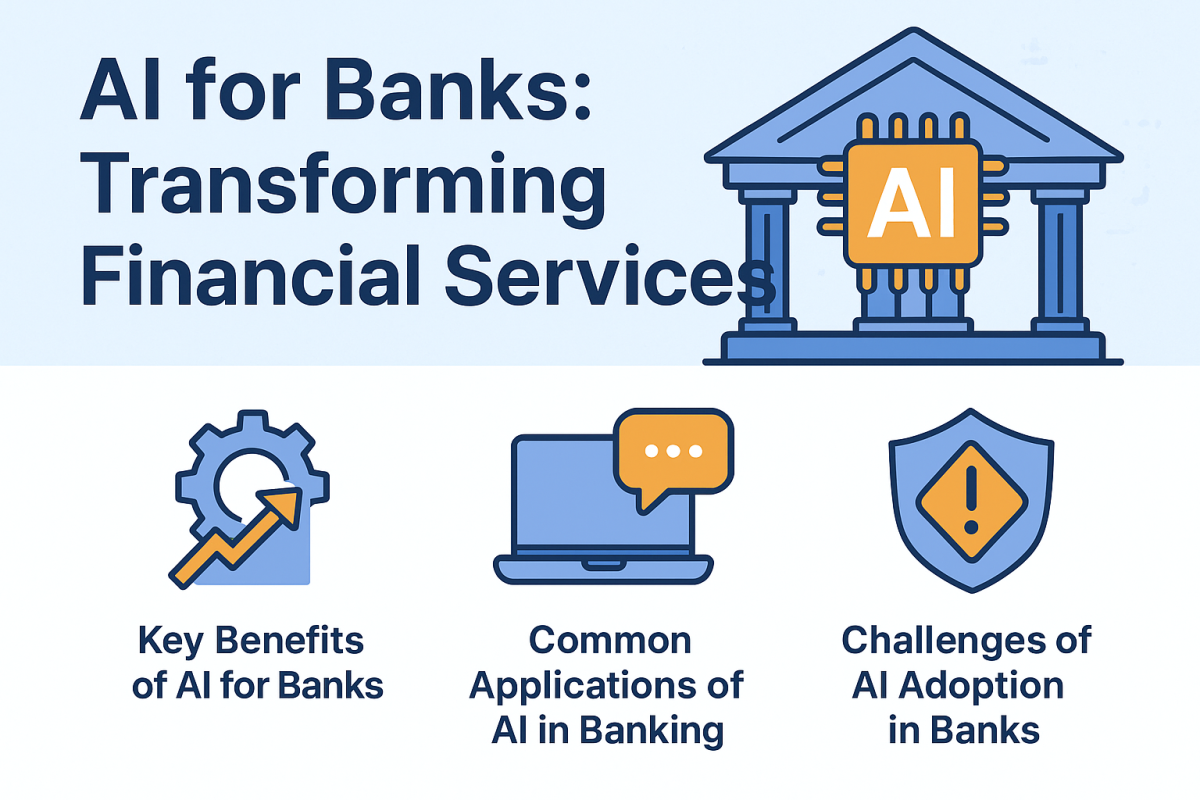
Key Benefits of AI for Banks
AI improves efficiency, security, and customer engagement. It reduces manual work and lowers costs. It stops threats faster. It enables personalised services.
Automation is a core benefit. AI handles routine tasks such as verifying documents or routing queries. This frees staff for higher-value work and reduces mistakes.
For fraud prevention, AI watches transaction patterns and flags unusual activity in real time. That reduces losses and limits customer harm.
On customer experience, AI analyses behaviour to offer tailored advice and products. That builds trust and encourages long-term relationships.
Finally, AI supports strategic choices. Models process large datasets to uncover trends and risks. This leads to smarter resource allocation and clearer forecasting.
Improved Efficiency
AI replaces repetitive manual tasks with automated flows that run 24/7. Document checks, reconciliations, and basic approvals become faster.
Enhanced Customer Experience
AI powers chatbots and virtual assistants that answer routine questions immediately. Models suggest savings goals and product matches based on real behaviour.
Fraud Detection
Machine learning detects subtle fraud patterns that rule-based systems miss. Alerts appear in real time so teams can act quickly.
Common Applications of AI in Banking
AI appears across customer support, lending, risk, and operations. It reduces wait times, improves decisions, and automates reporting.
Chatbots handle routine service. Lending models consider more data for fairer approvals. Predictive analytics forecast demand and detect risk early. These uses together make banking faster and safer.
Chatbots and Virtual Assistants
Chatbots answer routine queries instantly. Virtual assistants guide customers through tasks and give tips. These tools reduce call volumes and speed service. They work 24/7 and keep records for audit.
Credit Scoring and Loan Approval
AI expands credit models with more signals than traditional scores. This improves access for people with limited history. Decisions arrive faster and defaults fall when models are well designed.
Predictive Analytics for Decision-Making
Predictive models turn data into practical signals. Banks use them for marketing, liquidity planning, and risk forecasts. Timely insights lead to better offers and lower loss.
Challenges of AI Adoption in Banks
AI brings technical, legal, and trust issues. Data privacy, explainability, and legacy systems are common hurdles. Staff skills and governance also matter.
Banks must protect sensitive data with strong controls and encryption. They must also keep models explainable for audits. Connecting AI to old systems often requires staged upgrades and careful testing.
Workforce change needs training and clear roles. Strong governance and collaboration between compliance and tech teams reduce risk. These steps help balance speed and safety.
Data Privacy & Security
AI depends on large datasets that include personal information. Secure storage, strict access controls, and monitoring are essential.
Regulatory Compliance
Automated decisions must be auditable and explainable. Regulators expect clear governance and documented model validation.
Legacy System Integration
Legacy platforms may not support modern APIs or data flows. Migrating gradually with modular AI components reduces disruption.
The Future of AI in Banking
AI will expand into advisory roles and real-time reporting. Expect personalised finance coaching and hyper-targeted products. Partnerships between banks and fintechs will speed innovation.
AI will also support sustainability reporting by assessing environmental risks. Institutions that pair tech with strong governance will lead. The priority is safe, customer-first deployment.
Conclusion
AI is essential for modern banking. It boosts efficiency, strengthens security, and supports personalised service. Adoption requires strong data controls, regulatory alignment, and well-defined governance.
The question for banks is how to deploy AI responsibly. Those that do will gain speed, better risk management, and closer customer relationships.
Ready to Explore AI Solutions?
info@globoserve.co.uk